Table of Contents
Explore Marrakech dress tips, seasonal outfits, Sahara clothing, packing lists and practical travel questions.
Start Here
What to Wear in Marrakech, Morocco: A Complete Travel Clothing Guide
Packing for Morocco feels exciting until you start wondering what people really wear in Marrakech. You may be picturing colorful markets, beautiful riads, sunny rooftop cafés and the golden dunes of the Sahara Desert. You want clothes that look good in photographs, but you also want to feel comfortable walking through the medina, visiting historical places and spending long hours outdoors. The good news is that you do not need a completely new wardrobe to enjoy your holiday.
The most useful rule is simple: choose comfortable, breathable clothes and bring a few modest options for traditional places. Visitors will see many different styles in Marrakech, from fashionable modern outfits to traditional djellabas and everyday jeans. There is no single outfit that everyone must wear. Clothing choices depend on the weather, the neighborhood, what you are doing and your personal comfort. In the old medina and small rural villages, outfits that cover the shoulders and reach around the knees or lower are a practical and respectful choice for women and men.
This updated Moorish Tour guide explains what to wear in Marrakech, what to pack for the Sahara, how to dress in different seasons and which shoes actually work for sightseeing. We also include easy outfit ideas, packing tables and answers to common questions about shorts, scarves, dresses and visiting cultural sites. Whether you are staying for a weekend in Marrakech or joining a longer Morocco tour to Merzouga, a little planning will help you travel with confidence.
Culture & Respect
Understanding Moroccan Dress Code and Local Culture
Morocco is a country with deep cultural traditions and a wide variety of people, and that is part of what makes visiting so interesting. In Marrakech, you will notice women wearing a traditional djellaba, women wearing jeans and blouses, men in shirts and trousers, and visitors dressed for warm holiday weather. The style on a fashionable restaurant terrace may be quite different from what people wear near a residential market or in a quiet village. Instead of thinking about one strict dress code, think about the place you are visiting and the activity you have planned.
In everyday public places, modest clothing is a considerate option but tourists do not need to wear traditional Moroccan clothing. A loose shirt, a midi skirt or a pair of linen trousers usually feels natural in the city. A scarf is useful to carry for sun protection, a chilly evening or extra coverage where you prefer it, but foreign women are not generally required to cover their hair just to walk around Marrakech. Equally, men can wear ordinary shirts, T-shirts and practical shorts; longer shorts or trousers often feel more suitable in traditional surroundings.
Marrakech is a visitor-friendly city, but clothing still carries different meanings in different settings. Swimwear belongs around pools and beaches rather than in the souks. When visiting a religious or cultural venue that welcomes tourists, always follow its own published visitor rules. Many active mosques in Morocco, including the Koutoubia Mosque in Marrakech, are not open for regular non-Muslim tourist visits, so a scarf does not automatically grant access. Enjoy the beautiful Koutoubia exterior and visit public historic sites instead.
Cultural Sensitivity and Respect
You do not have to cover your entire body or stop wearing your favorite clothes. Think of modest outfits as a helpful choice, especially in the medina and conservative neighborhoods, rather than a universal law for visitors. Neutral, light-colored outfits are easy to mix and comfortable in the heat. Clothing without offensive slogans is also a respectful choice when entering public spaces.
How Climate Changes Your Clothing Choices
Marrakech can be very hot in summer, while winter mornings and evenings may require a sweater or jacket. The High Atlas Mountains are usually cooler, and nights around Merzouga can feel surprisingly cold. Bring layers that you can put on and remove rather than depending on one heavy garment or only summer clothes. Your packing list should match your travel dates and exact destinations.
“The best clothes for Morocco are the ones that let you enjoy the country comfortably while showing consideration for the people and places around you.”
Everyday Outfits
What to Wear in Marrakech for Women
For women visiting Marrakech, relaxed dresses, airy trousers and comfortable tops are easy choices. The city is full of beautiful places to explore on foot, from Jemaa el-Fnaa and the spice markets to Bahia Palace and the lanes of the old medina. Clothes that feel light, give you room to move and provide some sun coverage are often the most useful. You do not need expensive travel fashion; a few good pieces that work together are enough for several days.
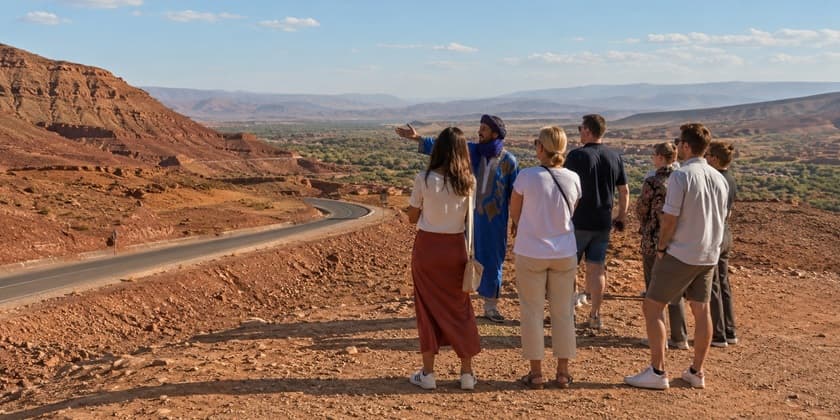
A long dress is ideal for a guided city tour because it can be cool and comfortable while looking lovely in photos. Linen or cotton trousers can be worn with a simple T-shirt, a button-up top or a light overshirt. If you prefer skirts, midi or maxi styles are versatile for cafés, gardens and historic neighborhoods. A crossbody bag keeps your hands free while you explore, and sunglasses and a hat help during sunny walks.
If you wear a sleeveless top or a short dress, you may feel more at ease adding a light shirt, cardigan or scarf when moving through the medina. You can still choose your own personal style. The important point is not to feel uncomfortable in your clothing or constantly worry about adjusting it while sightseeing. For evenings in a nice restaurant, you can dress more elegantly, but remember that the walk back to your riad may still take you through uneven old streets.
| Clothing item | Why it works | Easy outfit idea |
|---|---|---|
| Midi or maxi dress | Comfortable movement and useful sun coverage | Dress + flat sandals + light scarf |
| Loose linen trousers | Breathable and simple to restyle | Trousers + cotton T-shirt + trainers |
| Lightweight shirt | Protects shoulders and works as a layer | Shirt over a sleeveless top |
| Walking shoes | Support for full days in the medina | Trainers with breathable socks |
Dresses, Skirts and Trousers
Loose maxi dresses, midi skirts, wide-leg trousers and breathable palazzo pants are excellent travel pieces. Avoid fabrics that become heavy in high heat. You can wear shorts if you wish; knee-length or longer styles are often a comfortable compromise for the medina and more traditional areas.
Tops, Scarves and Layers
Short-sleeved cotton tops, linen shirts, airy blouses and light overshirts all work well. A thin scarf is useful for shade, dust on a day trip and extra warmth after sunset. You do not normally need a headscarf for everyday sightseeing in Marrakech.
Shoes and Accessories
For long sightseeing days, use trainers or sturdy walking sandals that you have already broken in. Add a comfortable bag with a zipper, a hat, sunglasses and sunscreen. High heels and very thin flip-flops are usually a poor match for long walks on the medina’s uneven surfaces.
Comfortable City Clothing
What to Wear in Marrakech for Men
Men can keep their Marrakech packing list straightforward. A few breathable T-shirts, collared shirts, lightweight trousers and comfortable shoes will cover most activities. Marrakech can be hot during the day, especially in summer, so you may prefer loose cotton or linen rather than thick jeans and heavy dark clothing. If you plan to take photographs, a simple neutral outfit also works beautifully against the warm red walls of the city.
For exploring the medina, choose a shirt that does not hold too much heat and a pair of trousers or comfortable shorts that allow you to walk and sit easily. For a nicer dinner, a casual button-down shirt and chinos are enough at many restaurants. A light jumper or jacket is useful in cooler months or on a mountain excursion. There is no need to bring formal clothing for most normal sightseeing itineraries, unless you have booked a venue with its own dress requirements.
A hat, sunglasses and practical walking shoes make a bigger difference than packing several extra outfits. If your holiday includes an excursion to the Sahara, light long trousers are especially helpful for sand and sun protection. In Marrakech itself, avoid depending only on sandals you have never worn before; blisters can quickly spoil a walking tour.
Shirts, Trousers and Shorts
Light shirts, breathable T-shirts, cotton chinos and knee-length shorts are versatile. Sleeveless gym vests or very short athletic shorts may feel out of place in conservative public settings; a normal T-shirt is an easy alternative.
Shoes and Layers
Supportive trainers or walking sandals are good for city exploring. Pack a lightweight jacket for cooler evenings, and a warmer layer if your trip also includes Atlas Mountain villages or the Sahara in winter.
What to Avoid
What Not to Wear in Marrakech: Practical Clothing Mistakes
The question is often not what clothes are banned, but what clothing will make sightseeing less comfortable. Very short beachwear, heavy winter fabrics in summer, stiff shoes and delicate high heels are all choices that can make a long day in Marrakech harder than it needs to be. People dress in many different ways in the city, but outfits that feel suitable beside a hotel pool may not feel as suitable in the middle of an old residential souk.
For women, extremely short skirts, very revealing tops and clothes that require constant adjustment may attract more attention in some traditional areas. That does not mean you must dress in a particular way; it simply helps to know the local atmosphere when choosing what feels right for you. Men may also prefer to save tank tops and beachwear for leisure areas instead of wearing them through the medina. Everyone should avoid clothing that carries insulting messages or images.
Practical mistakes matter just as much as cultural ones. Wearing brand-new sandals on a long tour can cause blisters. Packing only short-sleeved shirts can leave your shoulders exposed to too much sun. Bringing only black jeans to Marrakech in August may be uncomfortable, while arriving with no warm layer for a January evening or an overnight desert trip can be equally unpleasant.
| Common mistake | Better alternative | Reason |
|---|---|---|
| Thin flip-flops for a long city walk | Supportive trainers or walking sandals | Uneven streets and dust |
| Only beachwear for the city | Everyday shorts, shirts, skirts or trousers | More comfortable across different settings |
| Heavy denim in summer | Light cotton or linen trousers | Easier in strong heat |
| No warm layer for desert nights | Sweater or fleece | Evenings may be cold |
| New shoes on the travel day | Shoes already worn at home | Reduce blisters |
“Dress for the walk you are going to take, not only for the photograph you want to bring home.”
Seasonal Clothing Guide
What to Wear in Morocco in Spring, Summer, Autumn and Winter
Morocco is not hot in exactly the same way all year. A city holiday in Marrakech during July feels different from a January trip through the Atlas Mountains, and a February overnight stay in the Sahara needs different clothing from an afternoon by the Atlantic Ocean. Before packing, check the weather forecast for every stop on your route. The season is a helpful guide, but actual conditions can change quickly.
Spring is a favorite time for exploring Marrakech because many days are comfortably warm, although mornings, evenings and windy periods can feel cooler. Autumn has similar advantages for walking tours and longer trips across Morocco. In summer, protecting yourself from the heat becomes more important than trying to pack the smallest possible bag; loose, lightweight clothes, a hat and a reusable water bottle are essential. During winter, the days may be pleasant in the sunshine while nights and early mornings are quite cool.
If your trip combines Marrakech with Merzouga, Erfoud or the Atlas Mountains, think in layers. A breathable shirt can work during a warm afternoon, a light overshirt protects against the wind, and a fleece helps at night. Layering gives you flexibility without needing four different wardrobes.
| Season | What to wear in Marrakech | Extra item to pack |
|---|---|---|
| Spring (Mar–May) | Breathable tops, trousers, midi dresses | Light cardigan and wind layer |
| Summer (Jun–Aug) | Loose cotton or linen, sun hat, walking sandals | Extra sunscreen and breathable long sleeves |
| Autumn (Sep–Nov) | Light layers and everyday walking clothes | Sweater for evening |
| Winter (Dec–Feb) | Long trousers, shirts, jumper and jacket | Warmer layers for desert and mountain nights |
What to Wear in Marrakech in Summer
Choose the coolest comfortable fabrics you already own. Lightweight long sleeves can protect your skin from direct sunlight, and a sun hat matters when walking between attractions. Plan breaks at cafés or indoor venues during the strongest afternoon heat. A dark, heavy denim outfit may look good in photos but is often uncomfortable for a full outdoor day.
What to Wear in Marrakech in Winter
Bring a jumper and a proper jacket for mornings and evenings. Inside older riads or shaded medina lanes it can feel cooler than expected, especially when you are sitting still. A light scarf, socks and comfortable closed shoes are useful. If a desert camp is part of your itinerary, ask what heating and bedding are available before deciding how warm to pack.
Desert Clothing Essentials
What to Wear in Merzouga and the Sahara Desert
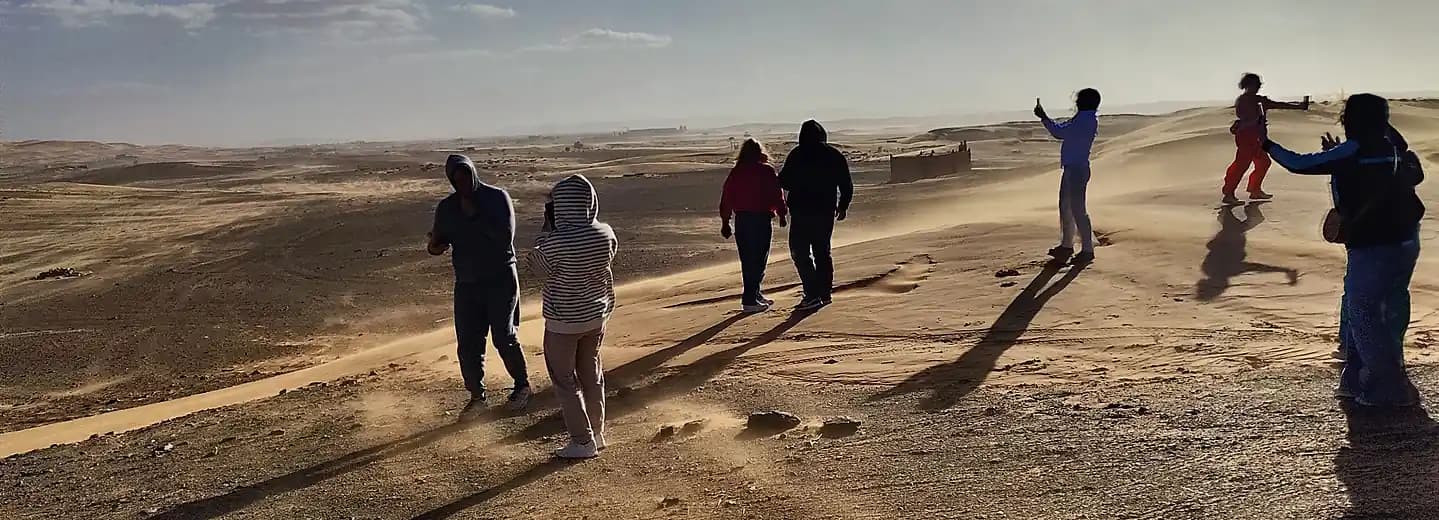
The Sahara Desert around Merzouga offers a completely different environment from the streets of Marrakech. During the day, bright sunlight reflects from the sand, and wind can lift fine dust into the air. After sunset, the temperature can drop, sometimes sharply in winter. That is why a good desert outfit needs to protect your skin, allow you to move comfortably and work with changing conditions. You do not need specialist desert clothes for a normal overnight camp, but the right basics make a real difference.
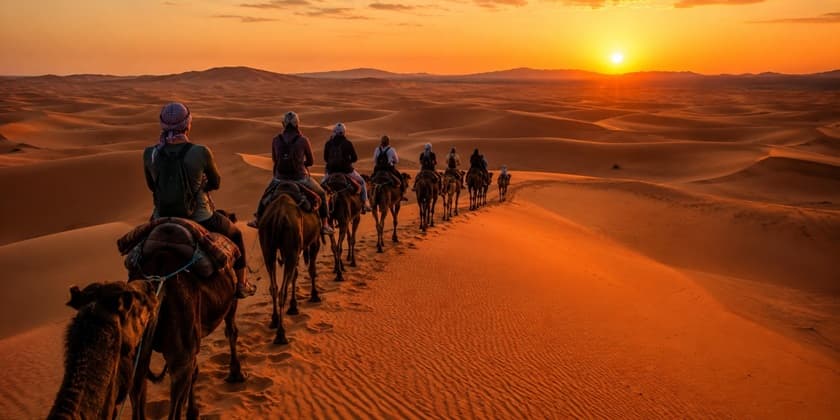
During the day, wear light long trousers, a breathable long-sleeved shirt or T-shirt, sunglasses and a hat that stays secure in the wind. A lightweight scarf can protect your neck and face if the sand is blowing, and shoes with closed toes protect you when walking around rocky areas. For a short dune walk, people often remove their shoes on clean soft sand, but you will still need footwear for camp areas and rough ground. Always follow your guide’s local advice.
For evenings, pack a fleece or jacket, particularly from late autumn through early spring. In winter a warm hat and extra socks may be welcome around camp after dinner. If you are booked into a luxury desert camp, confirm whether the tent is heated or cooled; the words luxury and desert camp do not mean all properties have the same facilities. Avoid packing only summer clothes because your Marrakech hotel felt warm at midday.
Daytime Clothing for Camel Trekking
Long trousers protect your legs from friction when seated on a camel. A soft, breathable top, sunglasses and a secure hat are helpful. Keep your phone or camera in a zipped bag, and avoid dangling items that can fall during the ride. If camel riding is not comfortable or suitable for you, ask about a vehicle transfer as an alternative.
What to Wear in a Sahara Desert Camp at Night
Bring a warm layer even if the day was hot. Pack sleepwear that you feel comfortable in, warm socks during winter and suitable shoes for walking between your tent and the dining area. Check the camp’s facilities before departure, including blankets, bathroom access, heating and the exact transfer arrangements.
Clothing for a 4×4 Desert Excursion
Comfortable trousers, a breathable top, a hat and closed shoes are practical for exploring off-road tracks near Erfoud and Merzouga. A scarf is useful for wind and dust when you step out of the vehicle. Keep water handy, and protect electronics from blowing sand.
Learn about Merzouga and the dunes of Erg Chebbi before your desert adventure.
Easy Clothing Combinations
Marrakech Outfit Ideas for Different Travel Days
You do not need to plan a completely different outfit for every photograph. The easiest Marrakech travel wardrobe has a few pieces you can mix and repeat. Choose two or three colors that work well together and add one comfortable layer. This makes packing lighter, keeps your suitcase organized and gives you practical choices when the weather changes during the week.
For a full medina walking tour, a breathable top, loose trousers and supportive shoes are hard to beat. For a garden visit or café lunch, a midi dress or smart cotton shirt works well. On a rooftop dinner evening, a light overshirt or cardigan is useful once the air becomes cooler. If you are visiting the Atlas Mountains, swap delicate footwear for good walking shoes and bring a jacket. When heading to the desert, prioritize protection from wind and sun over fashion accessories that can easily be lost.
You can still enjoy Moroccan design during your holiday. A locally made scarf or traditional piece of clothing can be a meaningful souvenir when bought respectfully from an artisan. Ask before photographing craftspeople or people wearing traditional dress, and remember that the most important part of any outfit is being able to explore without discomfort.
| Activity | Simple outfit idea | Useful extra |
|---|---|---|
| Marrakech medina walk | Loose trousers + T-shirt + trainers | Crossbody bag and hat |
| Palaces and gardens | Midi dress or shirt with chinos | Light scarf and sunglasses |
| Rooftop dinner | Smart casual dress or button-down shirt | Thin evening layer |
| Atlas day trip | Comfortable trousers + sturdy shoes | Warm layer and windproof jacket |
| Merzouga camel trekking | Long trousers + breathable top | Secure hat, scarf and water |
“A small wardrobe that works together will serve you better than a suitcase full of outfits you cannot comfortably walk in.”
Footwear Guide
Best Shoes to Wear in Marrakech, Souks and Day Trips
Good shoes are probably more important than any other item in your Marrakech suitcase. The old medina is a wonderful place to explore, but its narrow streets can be uneven, dusty and very busy. You might walk for several hours while visiting shops, markets, courtyards and monuments, so think about support, grip and comfort rather than only how the shoes look. Shoes you have already worn at home are usually the best choice.
Light trainers work well for most city tours. Supportive walking sandals are also a good option in warm months, especially if they have secure straps and comfortable soles. Flip-flops can be fine by a pool or for a very short walk, but they may be inconvenient for a full day in the souks. High heels are often difficult on old stone surfaces and are better saved for a short evening outing where transport is easy.
If you plan to visit the Atlas Mountains, ask whether your activity involves a simple village walk or a real hike. A short guided walk may only need sturdy trainers, but rocky or steep trails need suitable hiking footwear. For the Sahara, closed shoes help on rocky ground and dusty tracks, while some travelers prefer sandals for short camp activities. Carry socks to protect your feet when the evening cools down.
| Footwear | Works best for | Watch out for |
|---|---|---|
| Comfortable trainers | Marrakech city walks, long sightseeing days | Choose breathable fabric in hot weather |
| Supportive walking sandals | Warm-weather walking and light sightseeing | Dust and pebbles may enter |
| Hiking shoes | Atlas trails and rocky terrain | Can feel heavy for city-only trips |
| Flip-flops | Hotel, riad or poolside | Not ideal for long medina walks |
| High heels | Short evening plans | Uneven streets and cobblestones |
Dress for the Setting
What to Wear in Marrakech Medina, Rooftops, Restaurants and Hammams
One of the easiest ways to plan your outfits is to think about where you will spend the day. Marrakech has busy public markets, quiet residential lanes, stylish hotels, gardens, rooftops and modern neighborhoods, each with its own atmosphere. A shirt and loose trousers can work almost anywhere, while more relaxed resort clothes may be comfortable only in a hotel setting. Take one extra layer if you expect to move between different places during the same day.
The medina is an active neighborhood, not an outdoor museum, so considerate everyday clothing is usually the best choice. You may walk close to family homes, small workshops and local shops. For palaces and gardens that admit tourists, ordinary smart-casual clothing is generally fine, but check any posted visitor restrictions. When dining on a rooftop in Gueliz or the medina, most places are casual or smart casual. If you booked a high-end restaurant, check its specific rules rather than assuming one rule applies everywhere.
Traditional hammams and spas have their own practical requirements. Some provide towels, robes, slippers and wash products, while others ask guests to bring swimwear or certain personal items. Ask your chosen spa before going. At a hotel pool, swimwear is expected, but you will usually want a cover-up when walking into the lobby, restaurant or surrounding streets. Religious buildings deserve particular respect: many active mosques are not open to non-Muslim tourists, even with modest clothing.
| Setting | Practical clothing choice | Helpful reminder |
|---|---|---|
| Old medina and souks | Comfortable, modest casual clothes | Walking shoes matter most |
| Palaces and gardens | Breathable smart-casual clothing | Follow each venue’s rules |
| Rooftop restaurant | Everyday or smart-casual outfit | Bring a light layer after sunset |
| Hotel pool | Swimwear at the pool; cover-up elsewhere | Check property policies |
| Hammam or spa | Items requested by the venue | Ask about swimwear and towels beforehand |
| Mosque exterior | Respectful everyday dress | Most active mosques do not admit casual tourist visits |
Beyond Marrakech
What to Wear in the Atlas Mountains, Essaouira and Other Moroccan Cities
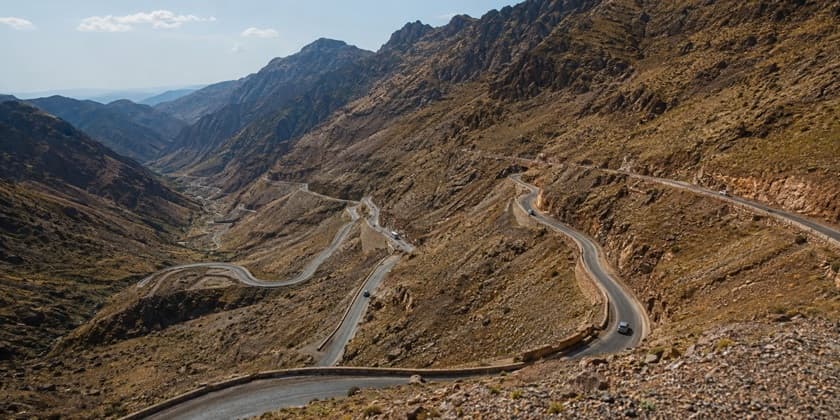
Many travelers discover that the climate changes quickly once they leave Marrakech. An Atlas Mountains day trip can begin in the warm city and continue to cooler villages and higher roads. Even when the sun shines, the air can feel different from the heat of the medina. For mountain trips, choose trousers that allow easy movement, supportive shoes and a warm or wind-resistant layer. If you plan to hike rather than take a scenic drive, ask your guide about the trail difficulty and any specific equipment.
Essaouira on the Atlantic coast is often breezy. A lightweight jacket can be useful even on a sunny day, especially by the fishing port or along the beach. Visitors can wear swimwear at the beach, but a shirt, dress or kaftan is a useful cover-up for cafés and markets. In Fes, the old medina is another place where breathable modest everyday clothing and comfortable walking shoes help you enjoy the experience. In Casablanca and Rabat, modern dress is common, but practical city clothing is still the easiest choice for sightseeing.
Small villages and remote areas can have more traditional social expectations than tourist-heavy Marrakech. An outfit with covered shoulders and longer trousers or skirts helps you feel comfortable when meeting local families or joining a cultural experience. When visiting any community, respectful behavior matters as much as your clothes. Ask permission for photographs, follow local guidance and avoid treating people’s homes as sightseeing displays.
| Morocco destination | Best clothing approach | Useful extra |
|---|---|---|
| High Atlas Mountains | Layers, trousers, sturdy walking footwear | Jacket for altitude and wind |
| Essaouira or Agadir coast | Light everyday clothes and beach cover-up | Wind layer |
| Fes medina | Comfortable, modest city outfit | Good walking shoes |
| Casablanca or Rabat | Everyday casual or smart casual clothes | Layer for coastal weather |
| Rural villages | Comfortable longer clothing | Respectful cultural awareness |
Save This Checklist
Morocco Packing List: What to Bring for 3 Days, 7 Days or a Desert Tour
Packing becomes easier when you choose clothes that match several activities rather than packing a new look for every day. For a short stay in Marrakech, two or three breathable tops, two bottoms and a lightweight layer are usually enough, along with comfortable shoes and personal items. If you are staying for one week, you can add a few more changes and plan to rewear practical outfits. A scarf, a sun hat and sunglasses are useful in many parts of the country.
Travelers joining a Marrakech to Merzouga journey should prepare for long drives, sunny desert afternoons and cooler nights. Bring an overnight bag that is easy to carry to your desert tent, even if your main suitcase stays in a vehicle or at a hotel. Check luggage arrangements in advance, especially if your camp is reached by camel. You may want to carry only a smaller overnight bag and leave larger suitcases safely with your driver, depending on the tour.
Your exact packing list depends on season, accommodation and how often you want to change clothes. Instead of carrying many unnecessary items, ask yourself whether each piece works with at least two different outfits. This simple approach gives you more choice while keeping your luggage easy to manage.
| Item | 3 days in Marrakech | 7 days / Morocco road trip |
|---|---|---|
| Breathable tops | 2–3 | 4–6 |
| Trousers, skirts or shorts | 2 | 3–4 |
| Comfortable walking shoes | 1 pair | 1 pair plus optional sandals |
| Warm layer | 1 | 1–2 depending on season |
| Hat, sunglasses, sunscreen | Yes | Yes |
| Light scarf or overshirt | Optional but useful | Recommended |
| Desert overnight clothing | Only if visiting the Sahara | Warm jacket, socks and sleepwear if camping |
- Comfortable clothes that you have worn before
- Lightweight tops that you can mix and repeat
- Loose trousers, midi dress or longer skirt
- Walking shoes and comfortable socks
- Hat, sunglasses and sun protection
- Crossbody bag or daypack with a zipper
- Refillable water bottle
- Light scarf and evening layer
- Warmer jacket for winter or mountain/desert nights
- Personal medication and everyday toiletries
- Phone charger and protective bag for dusty travel
- Check accommodation and tour luggage rules before leaving
Moorish Tour Trip Planning
What to Wear on a Marrakech to Merzouga Desert Tour
A multi-day Sahara tour from Marrakech is one of the best ways to see how varied Morocco really is. The route can pass the High Atlas Mountains, traditional villages, Ait Ben Haddou, valleys around Dades and Todra Gorge, and finally the dunes of Erg Chebbi near Merzouga. You may start your morning in a cool mountain area and finish the day in dry desert air. A small selection of layers is more useful than wearing the same thick outfit all the way through the journey.
On the first driving day, choose relaxed trousers, a breathable top and comfortable shoes. A light jacket or overshirt will help at scenic mountain stops. On the second day, if you arrive at Merzouga near sunset, change into trousers that are comfortable for a camel ride and take sunglasses, a scarf and a secure bag. For the camp evening, add your fleece or sweater. On the return day, dress for a long road journey with a few breaks rather than wearing clothing that is only suitable for photos.
Moorish Tour helps travelers plan routes from Marrakech, Fes, Erfoud and other Moroccan destinations. If you are choosing between a private driver, a shared departure or a desert camp option, discuss the season and activities before deciding what to pack. The ideal clothing for a December desert camp will be quite different from the clothing for a July city tour.
| Tour day | Main activity | What to wear |
|---|---|---|
| Day 1 | Atlas crossing and kasbah stops | Layers + good walking shoes |
| Day 2 | Todra / Merzouga, camel ride and camp | Long trousers + sun protection + warm evening layer |
| Day 3 | Sunrise and long transfer | Comfortable travel clothes + jacket in cooler months |
A Simple Three-Day Clothing Plan
Day 1: breathable everyday outfit, walking shoes and light mountain layer. Day 2: comfortable long trousers, shirt, scarf and secure shoes for the dunes, followed by warm camp clothing. Day 3: practical road-trip clothes with an optional extra top and socks for the drive back.
Explore the route from Marrakech through the High Atlas Mountains to Merzouga.
Discover Local Style
Traditional Moroccan Clothing: Djellaba, Kaftan and Scarves
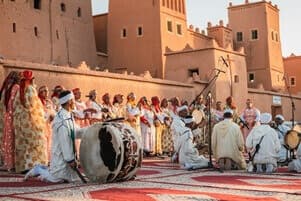
Morocco has beautiful traditional clothing, and you will see many examples as you travel. A djellaba is a loose robe, often with a pointed hood, worn in different styles by both women and men. A kaftan is often associated with elegant occasions and celebrations, although styles vary widely. In markets you will also see scarves, handmade slippers and embroidered clothing with regional designs. These items are part of a living culture, not costumes created only for tourists.
If you would like to buy a traditional garment as a souvenir, choose something you will enjoy wearing and learn a little about how it is made. Local shops in Marrakech can offer cotton garments suitable for everyday wear, and some workshops produce more elaborate designs. Ask about fabric, cleaning instructions and size before paying. Prices depend on quality and craftsmanship, so the cheapest item may not be the best value.
Wearing a simple djellaba or scarf bought locally can be a fun way to explore Moroccan design respectfully. You are not expected to dress traditionally during your trip, and it is better to treat people’s clothing and cultural customs with curiosity rather than making assumptions. A friendly conversation with a shopkeeper or artisan may teach you more than a quick photograph ever could.
“Moroccan style is about more than colors and patterns; clothing also carries stories about the people, regions and traditions behind it.”
Last-Minute Advice
Common Clothing Mistakes to Avoid Before Visiting Marrakech
Many packing problems come from planning for a single photograph instead of the whole day. Travelers sometimes bring beautiful outfits but no shoes they can walk in, or arrive in summer with heavy materials that are uncomfortable in the heat. Others prepare for Marrakech only and forget that an overnight desert camp or a trip into the mountains can be cooler. Reviewing your itinerary before choosing your wardrobe can prevent all of these problems.
Try to avoid overpacking. If your bag is filled with complicated outfits, you may spend too much time getting ready and less time enjoying the city. A few reliable tops, two or three bottoms and comfortable layers often work much better. Also check that your luggage is easy to carry through an old medina where cars may not stop directly at your riad door. Travelers coming with children should remember sun hats, spare clothes, warm evening layers and suitable shoes.
If you are uncertain about a particular venue, ask your hotel or tour guide what clothing is appropriate for that visit. Local recommendations are often more useful than an internet rule that treats all of Morocco the same. Above all, choose clothes that make you feel comfortable, confident and ready to discover the places you came to see.
- Do not pack only summer clothes if your tour includes winter desert nights
- Do not depend on brand-new shoes for a long medina walk
- Choose light fabrics rather than heavy jeans in the hottest months
- Pack one versatile warm layer, even if the daytime forecast is pleasant
- Keep swimwear for pools and beach activities
- Check the dress rules of any special restaurant, spa or venue
- Protect your skin and stay hydrated during outdoor excursions
Quick Travel Answers
Frequently Asked Questions About What to Wear in Marrakech
Visitors often ask the same clothing questions before their first holiday in Morocco. These answers focus on comfort and good everyday choices, while recognizing that Marrakech is a diverse city and individual venues may have their own rules. Before traveling, check the season and make small changes to your packing list if you also plan to visit Merzouga, Essaouira or the Atlas Mountains.
What should female tourists wear in Marrakech?
Loose cotton or linen trousers, midi or maxi dresses, skirts and comfortable tops are easy choices. Covered shoulders and longer hemlines can feel more suitable in the medina, but there is no universal dress law requiring all female visitors to dress alike.
Do women have to cover their hair in Marrakech?
No. Women visiting Marrakech are not generally required to cover their hair for normal sightseeing. A light scarf can be useful for sun, dust, cooler evenings or individual venue requirements.
Can you wear shorts in Marrakech?
Yes. Shorts are worn by tourists, but longer or knee-length styles often feel more suitable in traditional public areas. Choose what is comfortable and appropriate for your activity.
Can men wear shorts in Morocco?
Yes. Comfortable shorts are commonly seen in tourist areas. Knee-length styles are a practical choice, especially when exploring historic neighborhoods.
Can you wear a sleeveless top in Marrakech?
You may see sleeveless tops in modern areas and hotels. Carrying a light overshirt or scarf gives you a convenient option for extra coverage in more traditional settings.
Can tourists wear jeans in Marrakech?
Yes. Jeans are normal everyday clothing, though thick denim can be hot during summer. Lightweight trousers are often more comfortable for a full sightseeing day.
Can you wear flip-flops in Marrakech?
You can, but flip-flops may be uncomfortable on uneven medina streets. Supportive sandals or trainers are better for longer walks.
Do tourists need a scarf to enter Marrakech mosques?
A scarf does not give access to mosques that are closed to non-Muslim tourist visitors. Many active mosques in Marrakech, including Koutoubia, are viewed from outside. Check entry rules for each specific site.
What should I wear in Marrakech in July or August?
Light, breathable clothing, sunglasses, a sun hat and shoes suitable for walking. Try to plan outdoor activities in cooler parts of the day and take frequent breaks.
What should I wear in Marrakech in December or January?
Pack everyday clothes with a jumper and a jacket for cooler mornings and evenings. If you are traveling into the mountains or the Sahara, bring warmer layers.
What should I wear for a Merzouga camel ride?
Comfortable long trousers, a breathable top, a secure hat or scarf and practical footwear. Keep loose accessories and electronics secured in a zipped bag.
Can I wear swimwear at a Marrakech hotel?
Swimwear is appropriate around most hotel pools, depending on the property rules. A cover-up is useful in restaurants, lobbies and outside hotel leisure areas.
What should I wear for a Marrakech hammam?
Every hammam or spa may have different rules. Ask whether to bring swimwear, a towel or personal toiletries before your appointment.
What fabrics are best for Morocco?
Cotton and linen are comfortable popular choices in warm weather. Lightweight technical fabrics can also work well, especially for walking and outdoor activities.
Do I need special clothes for a Morocco tour?
Usually not. Ordinary comfortable clothing, walking shoes and a few layers are enough for city sightseeing and many guided tours. Hiking and seasonal Sahara trips may need extra preparation.
Travel with Local Experts
Plan Your Marrakech and Sahara Adventure with Moorish Tour
Now you know what to wear in Marrakech, you can focus on the part that matters most: enjoying the journey. From your first walk through the old medina to a peaceful sunset in the Sahara, the right clothes can make each experience more comfortable. You can visit Marrakech for a few days, explore the Atlas Mountains or travel farther south to Erfoud and Merzouga, where a night at a desert camp gives your Morocco holiday a completely different feeling.
At Moorish Tour, we help travelers plan Morocco itineraries that fit their dates, interests and preferred travel pace. Tell us whether you want historical city visits, a private desert adventure, camel trekking, a relaxed family holiday or a journey with several stops. Our local team can explain how the route works and help you prepare for the activities and seasons you choose.
Contact Moorish Tour before your trip with your travel dates and starting city. We will help you explore the tour options and plan a journey through Marrakech and Morocco that feels personal, enjoyable and well organized.
Ready to Discover Marrakech and the Sahara?
Tell Moorish Tour your dates, arrival city and the experiences you want. Our local team can help you plan a private Morocco journey and prepare for each destination.