THE QUICK GUIDE
Unforgettable Morocco Tours: Where Should Your Adventure Begin?
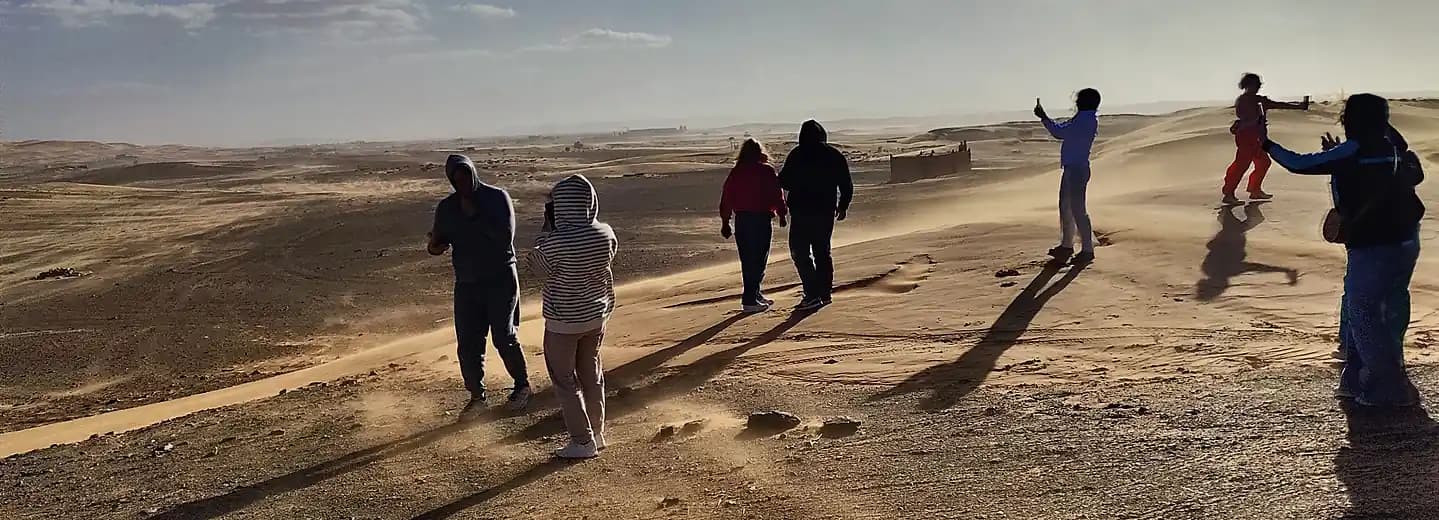
An unforgettable trip does not need to be complicated. Imagine a morning in the lively streets of Marrakech, an afternoon watching the High Atlas Mountains rise ahead of you, and a quiet evening with the golden dunes near Merzouga in the distance. A good journey connects these moments without making you feel that you are racing through the country.
The best Morocco tour is the one that fits your time, interests and travel pace. If you have three days, focus on one region or a guided desert route with realistic driving hours. With seven days, you can discover cities, mountain landscapes and the Sahara. Ten to fourteen days make it easier to add the north, coast and more cultural experiences without feeling rushed.
This guide from Moorish Tour is written for travelers planning their first visit to Morocco, as well as returning visitors who want to discover somewhere new. It covers the choices that matter: where to start, which places can be combined, how a desert camp works, what to ask before booking and when to go. Explore our Morocco tour packages if you want to compare options as you read.
You may have found this article using the older phrase “unforgettable Morocco tours 2025.” The URL keeps that name, but the planning advice is written to remain useful for future trips. Tour schedules, prices, accommodation and local conditions should always be confirmed for the dates you actually travel.
WHY TRAVEL MATTERS
What Makes a Morocco Tour Truly Unforgettable?
Great travel memories often begin with small details. It could be a cup of mint tea in a courtyard, a friendly conversation with a local craftsperson or the first time you see a landscape that looks completely different from home. Famous monuments are wonderful, but your journey should also give you time to notice ordinary life.
One advantage of traveling with local planning is understanding how long the roads really take. A map may make two places look close, while a mountain crossing, market visit or lunch stop changes the day. A sensible route gives space for photographs and short walks, not just long hours in a vehicle. That is why we recommend looking at the full itinerary before choosing a tour by price alone.
At Moorish Tour, the most useful planning questions are simple: What kind of experiences make you happy? Do you prefer history, scenery, food, or time outdoors? Are you comfortable with long drives? Would you like quiet evenings, cultural activities or a more active holiday? A tailor-made Morocco tour can be shaped around those answers.
“The little moments between destinations often become the stories you remember after the holiday ends.”
CHOOSE YOUR HIGHLIGHTS
Best Places to Visit on an Unforgettable Morocco Tour
You do not have to see every famous place to understand the beauty of this country. The best route often joins a few contrasting regions: a city full of history, a peaceful natural area and one memorable overnight experience. With extra time, the northern mountains or Atlantic coast can give your journey another feeling.
| Destination | Main experience | Suggested time |
|---|---|---|
| Marrakech | Souks, palaces and food | 2 nights |
| Fes | Medina, craft workshops and history | 1–2 nights |
| Merzouga | Erg Chebbi dunes and desert camp | 1–2 nights |
| Chefchaouen | Blue lanes and Rif mountain setting | 1 night |
| Essaouira | Atlantic coast and relaxed medina | 1–2 nights |
| Dades and Todra | Valleys, rock scenery and short walks | 1 night en route |
Fes is ideal if you enjoy historic medinas, artisans and traditional architecture. Chefchaouen attracts visitors with its blue-painted lanes and calm mountain setting. Rabat offers royal monuments and a relaxed capital-city atmosphere. Casablanca is useful for international arrivals and the impressive Hassan II Mosque. Essaouira gives you Atlantic air, fishing boats and a slower coastal day.
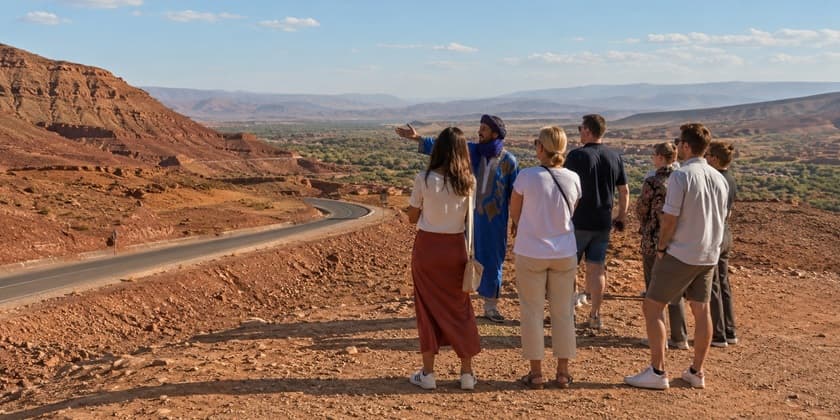
Southern destinations have their own character. The old earthen buildings of Ait Ben Haddou and the rock walls of Todra Gorge work beautifully on a road trip. Near the Sahara, Erfoud is known for its fossils and date-palm region, while the dunes beside Merzouga are a wonderful place to enjoy sunset.
Not all these places belong on the same short trip. If your travel time is limited, select three or four stops that make sense together instead of trying to collect every famous destination in one week. Our Discover Morocco route guide offers more ideas for combining regions.
THE RED CITY
Marrakech: Markets, Riads and the Feeling of an Old City
Marrakech makes a lively start to a holiday. Inside the medina, busy souks open into small squares and workshops where people make lanterns, leather bags and beautiful handwoven goods. It can feel noisy and exciting during the day. Later, a traditional riad courtyard offers a calm place to rest before dinner.
Jemaa el-Fnaa is one of the best-known gathering places in the city. Visit the square at different times and you will notice how the atmosphere changes. You can also enjoy the view of the Koutoubia Mosque from outside, visit Bahia Palace or plan an easy afternoon in the gardens. Some attractions require advance tickets or have changing opening arrangements, so make a practical schedule rather than a list of too many stops.
Two nights in Marrakech give most first-time visitors time for a guided walk and a more relaxed discovery day. If you only have three days in the country, a city stay with a nearby Atlas excursion may feel much less rushed than trying to drive all the way to the Sahara and back. Read our three days in Marrakech itinerary for ideas.
Small cultural details are part of the experience: a bakery sending out warm bread, the scent of spices near a food stall, or a shopkeeper explaining how a carpet is made. Take breaks, respect people when photographing them and leave room to enjoy the atmosphere.
MOUNTAIN ROADS
High Atlas Mountains: More Than a Road to the Desert
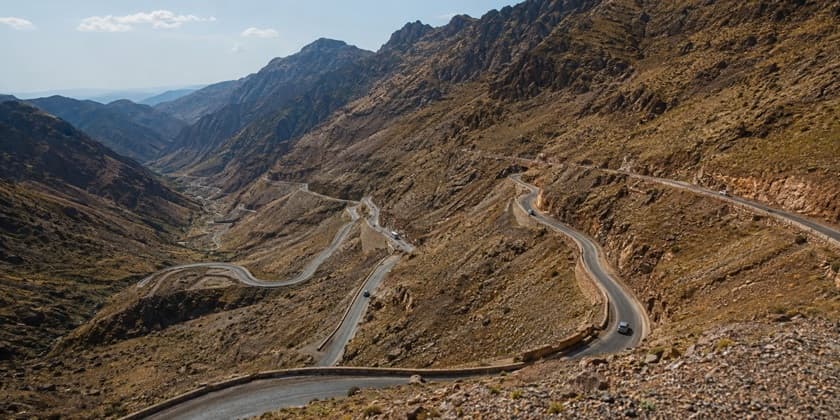
For many visitors, the mountain drive becomes a favorite part of a tour. The road rises out of Marrakech, curving past terraced fields, high ridges and small Amazigh villages. At viewpoints, the scenery looks different from one turn to the next. In cooler months, the highest mountains may even have snow.
A common southern itinerary crosses the Tizi n’Tichka Pass before heading toward Ouarzazate and the kasbah country. The pass is a scenic road, not a guaranteed high-speed transfer. Winter weather, road maintenance and traffic can affect travel times. A good driver leaves enough time for safe driving and sensible breaks.
If you prefer an easy day out rather than a long road trip, the valleys closer to Marrakech offer walks, local lunches and village visits. A day in the mountains can be as rewarding as adding a faraway destination to an already busy schedule.
Respectful cultural visits are arranged with local people who welcome guests. Avoid treating houses and villages as open photography sets. Ask permission, support local businesses where possible and listen to the stories of your hosts.
KASBAH COUNTRY
Ait Ben Haddou and Ouarzazate: The Road Through History
Ait Ben Haddou is one of the most memorable stops on the route between Marrakech and southern Morocco. From a distance, its earthen towers rise above the landscape in layers of warm brown and red. Up close, narrow lanes and traditional construction show why this historic ksar has attracted so many visitors and filmmakers.
Walk at a comfortable pace and bring water if the weather is warm. Some paths are uneven and there are steps and slopes, so supportive shoes are useful. The view from the higher parts can be beautiful, but you do not need to climb to the very top to appreciate the site. Give yourself enough time to look, not just take one photograph and leave.
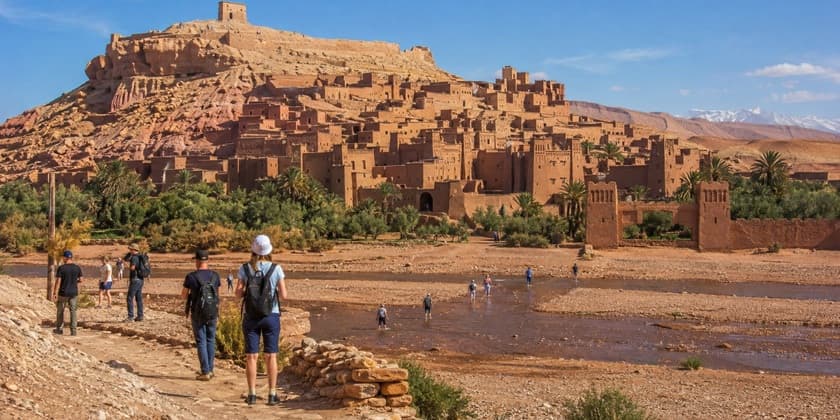
Ouarzazate is often called a gateway to the Sahara. It is a practical stop between the mountains, valleys and desert, with kasbah architecture and a long connection to film production. Many visitors continue toward Skoura or Dades Valley for their overnight stay.
If you are choosing a Marrakech desert tour, check how much time the route actually allows at Ait Ben Haddou. A long checklist of attractions does not always mean there is enough time to enjoy each one.
SCENIC VALLEYS
Dades Valley and Todra Gorge: Southern Morocco at Its Best
The Dades area offers a different kind of beauty from the desert dunes. Red rock formations surround small villages and cultivated land, and the roads reveal new viewpoints as they follow the valley. A peaceful guesthouse night here can break up the drive from Marrakech to Merzouga and make a short desert tour more comfortable.
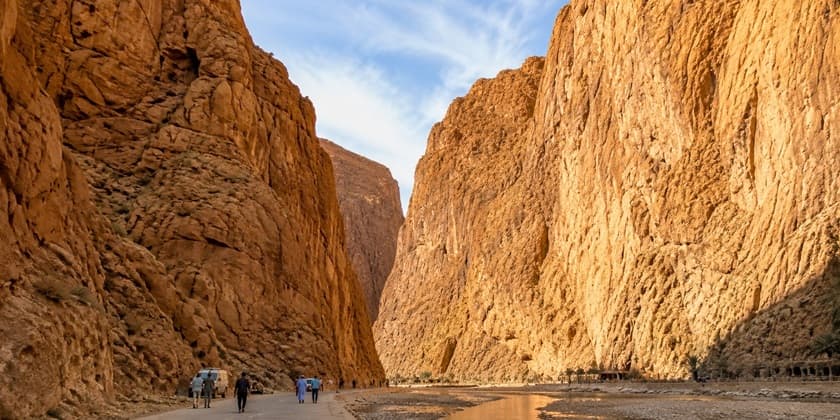
Todra Gorge is known for its tall rock walls and narrow passages. Depending on water levels, access and local conditions, visitors may enjoy a short walk along the lower gorge. The high cliffs make the area feel dramatic, while small cafés and villages nearby provide a chance to stop without rushing.
It is easy to underestimate the amount of driving between stops. Families and travelers who prefer a gentle pace may appreciate spending a night in the valley instead of continuing late into the evening. If you want a relaxed journey, build the route around daylight and rest rather than squeezing in every viewpoint.
The gorges are especially lovely for travelers who enjoy photography and nature. Take your time, choose safe places to stop and stay aware of traffic on winding roads. The experience is about the landscape and local life, not simply reaching another pin on a map.
DESERT HIGHLIGHT
Sahara Desert and Erg Chebbi: A Night You Will Remember
Arriving at the dunes beside Merzouga can feel like reaching a different world. Rocky plains give way to sand that changes color through the evening. The horizon opens, and small sounds stand out: footsteps, the movement of a camel or the wind over a ridge. Even travelers who have seen countless desert photographs are often surprised by how peaceful the real place feels.
A common desert stay includes an afternoon arrival, a camel ride or another arranged transfer, sunset, dinner and an overnight camp. The next morning, many guests wake up early to enjoy the changing light before breakfast. The exact details depend on the accommodation and tour you select.
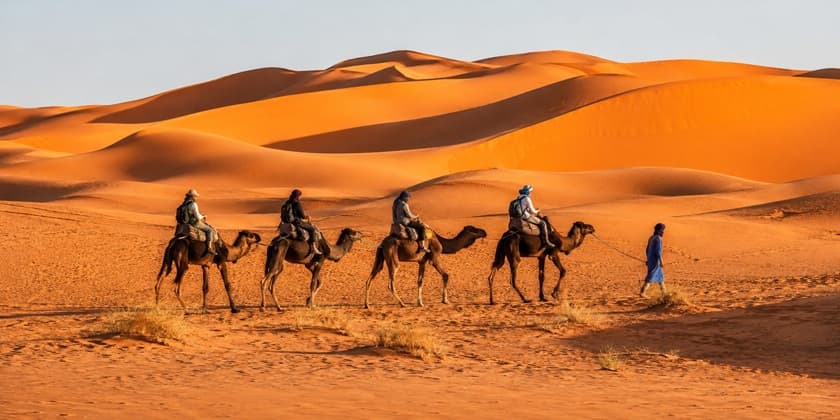
You do not have to ride a camel. Many camps offer a vehicle transfer for travelers who prefer it, depending on their location. Ask what is possible if you are traveling with children, have mobility concerns or simply want to avoid the ride. A clear explanation before booking is always better than assuming every package offers the same choice.
For a deeper look at the town, nearby villages and dunes, open our easy Merzouga travel guide. It explains how to decide between one and two nights and what to expect beyond the classic sunset excursion.
OVERNIGHT COMFORT
What Is a Merzouga Desert Camp Really Like?
A desert camp is not one standard type of accommodation. Some camps use simple tents with basic shared facilities, while others provide larger private tents and more comfortable bathrooms. An impressive photograph does not tell you whether your particular tent has hot water, private facilities, heating or cooling. Those details should be confirmed when you book.
Ask about the meeting point, where you leave large luggage, how you reach the camp and what happens in windy weather. Dinner and breakfast are often included, but drinks, extra activities and special transfers may not be. If a private bathroom or a particular bed arrangement matters to you, put it in your written booking request.
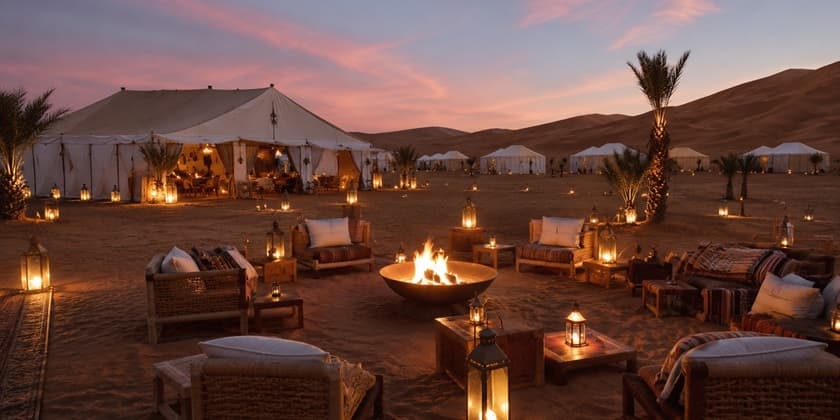
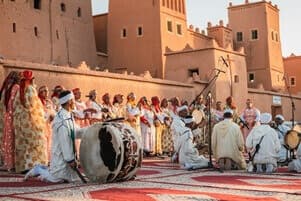
A camp evening can be one of the nicest moments of the trip. You may enjoy a traditional meal, warm tea and time outdoors under the stars. Music or a campfire may be offered, but they depend on the camp, weather and schedule. Leave time for quiet as well; the calm of the dunes is often the biggest luxury.
Use our Merzouga luxury desert camp comparison to learn what to ask about tent types and amenities before choosing a place. The best camp is not always the most expensive one—it is the one that matches your expectations.
BEYOND THE DUNES
4x4 Desert Trips and Local Experiences Near Merzouga
If you can stay an extra day, the Sahara becomes much more than a sunset photo. A guided outing can explore open rocky land, different viewpoints and nearby communities, while a relaxed village visit introduces local music and everyday life. The variety of landscapes is part of what makes southeastern Morocco such an interesting region.
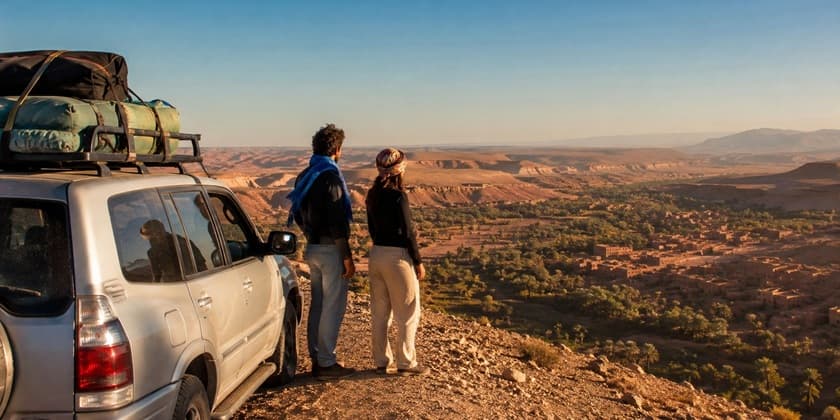
A 4x4 is helpful for appropriate off-road routes, but you do not need one just to use the paved road from Erfoud to Merzouga. The reason for choosing a suitable vehicle depends on the planned route and the camp transfer, not on the word “desert” alone. Ask whether your excursion stays on established tracks and how wildlife and sensitive areas are protected.
Cultural visits are best when guests and local hosts both welcome the encounter. Ask permission before photographing people, respect privacy and support local businesses without feeling pressured to buy anything. If you are interested in the landscapes and excursions around Erfoud, see our Sahara 4x4 excursion guide.
IMPERIAL CITIES
Fes: Traditional Crafts, History and Local Life
Fes rewards travelers who enjoy walking slowly and looking closely. Its old medina has narrow streets, small workshops, traditional markets and historic religious schools. Rather than trying to understand every turning on your own, many first-time visitors prefer a licensed local city guide who can explain the history and help them find workshops that interest them.
In the tanneries, you may see the famous colored vats and leather-making process from surrounding terraces. Craft workshops, pottery and carved wood show other sides of the city's heritage. Remember that some of these are working places, not attractions built only for visitors. Be polite, respect the workers and ask before taking pictures.
Give yourself time for a good lunch and a break in a quiet courtyard. If the weather is warm, walks may be more comfortable in the morning. A guided medina tour can be a highlight, but it should include meaningful stories and not just shopping stops.
Fes also works as a starting point for the desert route through Ifrane, Midelt and the Ziz Valley. See our Fes desert tours and three-day Fes to Merzouga itinerary if you are considering that direction.
THE BLUE CITY
Chefchaouen and Northern Morocco: A Calmer Kind of Journey
Chefchaouen feels very different from the busy imperial cities. Its blue-painted lanes wind between small homes and shops against a mountain backdrop. It is a pleasant place for an easy walk, a scenic viewpoint and an overnight stay that lets you see the town after many day visitors have left.
The Rif Mountains around the town offer lovely natural scenery. Choose walks that match your fitness level and ask about trail conditions rather than assuming every path is easy. The medina is a living neighborhood, so respect doorways and private spaces when photographing the blue walls.
Travelers arriving through Tangier sometimes combine Chefchaouen with Fes, Rabat and the coast. This can be an excellent week-long journey if your focus is northern culture, but it may not leave enough time for a comfortable Sahara visit. There is no need to force two very different routes into one trip.
If you have ten days or more, a north-to-south itinerary becomes easier to organize. Our Tangier tour ideas and all Morocco tours guide can help you compare the choices.
CAPITAL & COAST
Rabat and Casablanca: History, Architecture and a Relaxed Start
Rabat can feel gentle after the movement of a busier medina. The Hassan Tower area, the Kasbah of the Udayas and the city's green spaces make it a pleasant cultural stop. Depending on your route, you may spend a few hours in the capital or enjoy an overnight stay to explore at a slower pace.
Casablanca is often the first place travelers see after an international flight. It has busy urban streets, modern architecture and the grand Hassan II Mosque facing the Atlantic. Guided interior visits, when available, follow specific opening times and visitor rules, so check the schedule before planning your day.
A good route might use Casablanca as the arrival point, continue to Rabat and northern Morocco, then move toward Fes and the interior. Another option is to travel toward Marrakech and begin a southern itinerary. The correct choice depends on your flight and how much driving you want to do.
For visitors looking for a longer private journey from the airport, our Casablanca-to-Sahara tour ideas can help you compare durations and destinations rather than making decisions only after landing.
OCEAN AIR
Essaouira: The Perfect Coastal Pause After Busy Travel Days
A walk along Essaouira's seawalls feels like a change of pace. The sea breeze cools the air, fishing boats gather near the harbor and small cafés invite visitors to take their time. Compared with the larger medinas, its historic center is compact and relatively easy to explore on foot.
You can spend the day discovering local craft shops, enjoying fresh seafood or walking beside the Atlantic. The wind is part of the town's character, so a light jacket can be useful even when Marrakech feels warm. Beach activities depend on weather and sea conditions, and the water may feel cool at certain times of year.
Essaouira works especially well as a day trip from Marrakech or as a relaxing overnight at the beginning or end of a longer vacation. It is not normally a quick stop on a tightly scheduled Merzouga desert route. Plan the coast as its own experience if you want time to enjoy it.
A visit here also reminds travelers that the country's highlights are not all inland. Busy markets, cool ocean air and peaceful desert landscapes can all belong in a thoughtfully planned holiday—just not necessarily on the same short day.
SHORT HOLIDAYS
Three-Day Morocco Tours: What Can You Really See?
Three days can be wonderful if you plan around one main goal. A city-based itinerary is ideal for short flights and relaxed sightseeing. A desert-focused route can also work, but it usually includes long days on the road. Being clear about that trade-off will help you enjoy the tour rather than feel surprised by the schedule.
| Three-day style | Good for | Important planning point |
|---|---|---|
| Marrakech city stay | Short arrivals, culture, food and nearby hills | Very little long-distance travel |
| Marrakech–Merzouga return | Sahara-focused visitors who can manage road time | Long drives on days one and three |
| Fes–Merzouga return | Middle Atlas scenery and dunes | Several hours of driving each way |
| Errachidia–Merzouga | Travelers whose main goal is a desert stay | Flights and onward transfers must be checked |
One classic option is the 3-day Marrakech to Merzouga tour. It crosses the High Atlas, includes southern valleys and reaches the dunes for an overnight camp stay. The return drive is long, so it suits travelers who are comfortable spending a good part of the trip in the vehicle.
Starting from Fes is another choice. The 3-day Fes to Merzouga tour via Erfoud follows a different route through the Middle Atlas and desert-edge landscapes. If your goal is mainly the dunes rather than a country-wide drive, our Errachidia to Merzouga option can reduce travel time if you can arrive near the desert.
ONE-WEEK HOLIDAY
Seven Days in Morocco: A Balanced Itinerary You Can Enjoy
Seven days give you enough time to start feeling the variety of the country, especially if you choose a route that moves in one direction. A Marrakech-to-Fes itinerary can work well for travelers who enjoy scenic drives, historic places and one memorable Sahara night. It avoids trying to return to every city along the same route.
| Day | Route idea | Main experience |
|---|---|---|
| 1 | Arrive in Marrakech | Check in and relax |
| 2 | Marrakech | Medina, historic sights and food |
| 3 | High Atlas to Dades | Tizi n Tichka, Ait Ben Haddou, scenic valleys |
| 4 | Dades to Merzouga | Todra Gorge and desert sunset |
| 5 | Merzouga toward Midelt | Sunrise and Ziz Valley road trip |
| 6 | Midelt to Fes | Middle Atlas scenery, arrive Fes |
| 7 | Fes and departure | Medina visit if flight timing allows |
On the first day, settle in after your flight. Spend the second day exploring Marrakech with a guide. Then cross the High Atlas for an overnight in southern Morocco. Continue through Todra Gorge toward the dunes, and give yourself time for a relaxed desert morning before heading north through the Ziz Valley and Middle Atlas. Finish with the history and food of Fes.
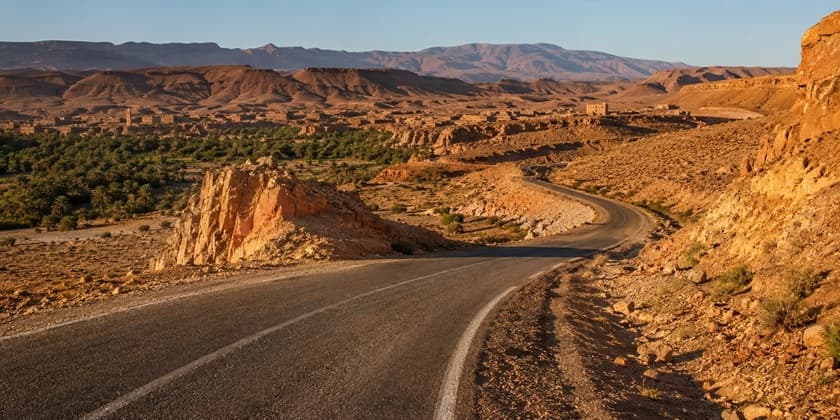
This is a planning example, not a fixed promise that every attraction fits every departure time. The itinerary works best with an open-jaw flight—arrive in Marrakech and depart from Fes, or the reverse. If you need a round trip from Marrakech, choose a slightly different route with an extra night for the drive.
See our one-week Morocco travel guide and 7-day Morocco package to compare the possible combinations before deciding.
A LITTLE MORE TIME
Ten Days in Morocco: Cities, Desert and Mountain Scenery
Ten days create room for a more relaxed trip. You can include Casablanca or Rabat, enjoy Fes, travel to the Sahara, and finish with Marrakech without filling each day with too many stops. Another popular idea is to add the blue city in the north, although that increases the driving and should be planned carefully.
| Part of the trip | Suggested nights | What you can enjoy |
|---|---|---|
| Casablanca / Rabat | 1 | Arrival and capital or coast |
| Fes | 2 | Historic medina and local crafts |
| Middle Atlas / Sahara drive | 1 | Scenic road to southeastern Morocco |
| Merzouga | 2 | Camp night and relaxed extra day |
| Southern valleys | 1 | Todra and Dades landscapes |
| Marrakech | 2–3 | Guided city visit and unhurried departure |
The most important improvement over a short itinerary is that you can stay two nights in some places. Two nights in Fes give you a full guided medina day without arriving and leaving immediately. Two nights around the Sahara give you time for the camp sunset and another easy outing the following day.
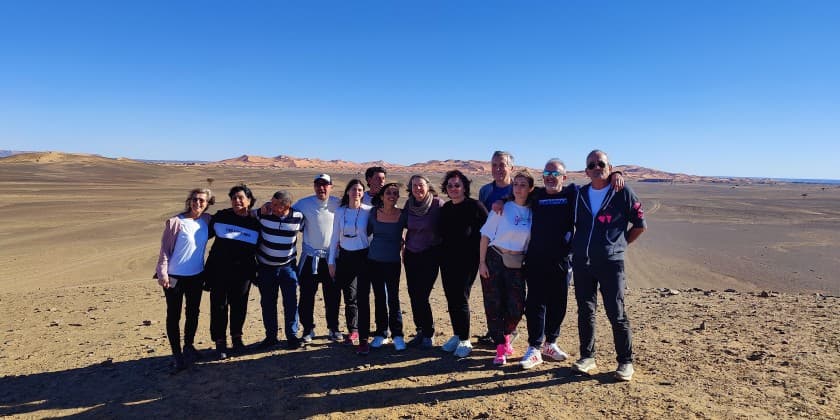
If you prefer a comfortable pace, skip one destination rather than forcing every famous city into ten days. For example, a southern route can include extra time in Marrakech, while a north-to-south route may need fewer coastal stops. Your flight city also changes what is practical.
Our Morocco Wonders Tour and all tour packages provide ideas for different trip lengths and travel styles. Ask for a route map before confirming your booking.
SLOWER & DEEPER
Fourteen Days in Morocco: A Relaxed Grand Tour
Two weeks can feel like a real journey rather than a fast sightseeing trip. With fourteen days, you have more freedom to combine imperial cities, the Rif or Middle Atlas, the Sahara, southern valleys and perhaps a few days near the ocean. You can also slow down in places that interest you most instead of moving every morning.
A practical route might start in Casablanca, visit Rabat and Chefchaouen, spend two nights in Fes, head through the Middle Atlas toward Merzouga, then continue across southern Morocco toward Marrakech. If time allows, finish with a coastal break in Essaouira. The direction may be reversed to match your flights.
| Duration | Realistic highlights | Pace |
|---|---|---|
| 3 days | One city or a short guided desert circuit | Focused; desert option includes long drives |
| 7 days | Marrakech, Atlas, Merzouga, Fes | Active road trip |
| 10 days | Cities, mountains, Sahara and more time at stops | Balanced with good route planning |
| 14 days | Add northern cities, coast and slower stays | More relaxed, with room to customize |
There is no prize for visiting the greatest number of places. A slower afternoon, local cooking experience, garden walk or village lunch may add more to the holiday than another long transfer. If you enjoy photography, allow extra mornings in places where the light makes a difference.
Moorish Tour can help organize a custom Morocco itinerary with the comfort level, interests and rest stops that suit your group. The more clearly you explain your priorities, the easier it is to create a route you will actually enjoy.
YOUR TRAVEL STYLE
Private Morocco Tours or Small Group Tours: Which Is Better?
Both private and small-group travel can be enjoyable. The important difference is how the day is organized. On a private tour, your group usually has its own vehicle and can discuss suitable stops with the driver or guide. On a shared departure, the schedule is set for everyone and may be less flexible, but the experience can be social and sometimes more affordable.
| Tour style | Advantages | Considerations |
|---|---|---|
| Private tour | Flexible stops and pace; your group and vehicle | Usually priced differently from shared tours |
| Small group | Social atmosphere and organized departure | Fixed meeting times and limited changes |
| Tailor-made | Route and comfort level planned for you | Requires detailed discussion before confirmation |
Private travel can work especially well for families, couples, photographers or people who need a slower pace. You may want longer meals, extra rest breaks or a different accommodation standard. A small-group tour can be a good choice if you enjoy meeting people and do not mind following an agreed schedule.
Ask which services are actually private. A private vehicle does not always mean an exclusive desert camp or private guided city visit. Likewise, a group tour may include a private tent. Check every item in writing so you understand what you will share and what you will not.
“A comfortable pace and clear expectations matter more than a fancy label on a tour package.”
If you are deciding between options, tell Moorish Tour your group size and travel dates. We can discuss a suitable itinerary and what each package includes.
WHO YOU TRAVEL WITH
Morocco Tours for Couples, Families and Solo Travelers
Different travelers remember different moments. Couples might love a peaceful desert sunset and a quiet riad courtyard. Families often enjoy a mix of short cultural visits, open landscapes and hands-on activities. Solo visitors may prefer a guided itinerary that makes transfers simple and gives them opportunities to meet people safely.
For families, avoid trying to spend all day sightseeing after a long drive. Plan comfortable breaks, make sure children have enough water and ask about appropriate activities and sleeping arrangements. Desert temperatures and camp access can matter just as much as the photographs of the tents.
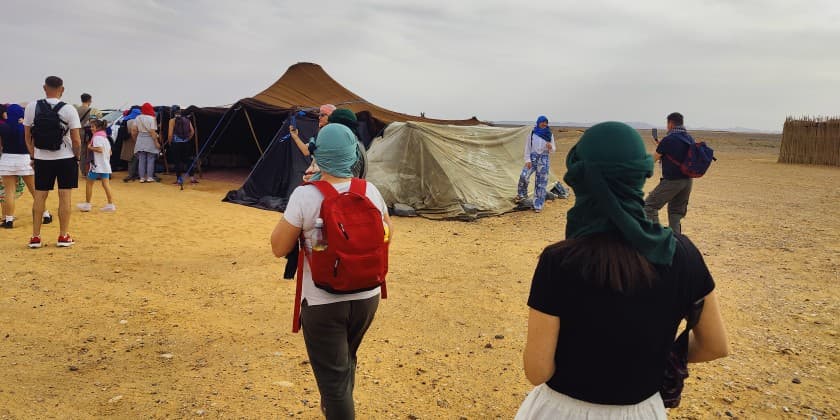
Couples should think about whether privacy matters most in the vehicle, at the hotel or at camp. Solo travelers may wish to confirm whether a single-room supplement applies and how arrival transfers are arranged. Good travel planning is not about assuming that one package suits everyone.
Our Morocco trip-planning service can help organize the journey around the people traveling. If you want to add food activities, nature photography or a quieter route, mention that from the beginning.
SEASONS & WEATHER
Best Time for Morocco Tours: Spring, Summer, Autumn and Winter
There is no single perfect month for every destination. Marrakech can be warm while the mountains are cool, and the Sahara can feel comfortable during the day but cold after sunset. That is why choosing a date starts with deciding whether your holiday focuses on the desert, cities, the coast or mountain walking.
| Season | Typical experience | What to pack or plan |
|---|---|---|
| Spring, Mar–May | Pleasant in many regions; possible wind | Layers and flexible desert plans |
| Summer, Jun–Aug | Hot inland and near the Sahara | Early activities, water, shade and cooling |
| Autumn, Sep–Nov | Popular for city and desert travel | Book preferred accommodation ahead |
| Winter, Dec–Feb | Cooler days; cold mountains and desert nights | Warm clothes and weather-aware driving |
Spring and autumn are popular for touring because many areas have more comfortable daytime conditions. Spring can bring wind and occasional sandstorms around the desert; weather is never guaranteed. In summer, inland cities and southeastern desert areas may experience extreme heat, so outdoor excursions often need an early start. In winter, mountain roads can be affected by weather and desert camp nights can be very cold.
Choose a route that fits the season rather than expecting the season to fit your route. A beach break or mountain stay may feel better during periods when a long midday desert walk would be uncomfortable. Always check a current forecast shortly before departure.
For a wider climate overview, our Morocco general information guide helps explain the difference between coastal, mountain and desert regions.
COST & VALUE
How Much Does a Morocco Tour Cost and What Is Included?
Tour prices vary widely because two packages with the same length can offer very different services. Group size, transport type, hotel standard, camp category, season and guiding arrangements all affect cost. A low starting price may cover a shared seat rather than a fully private tour, so it is important to compare like with like.
| Ask about | Questions worth confirming |
|---|---|
| Transport | Private or shared vehicle? Which departure and arrival cities? |
| Accommodation | Hotel/riad standard? Private desert bathroom? |
| Meals | Which breakfasts and dinners are included? |
| Guides | English-speaking driver and official medina guides? |
| Activities | Camel ride, 4x4 transfer and extra experiences? |
| Payments | Deposit, balance, cancellation and refunds? |
Look closely at accommodation: is it a private room, an ensuite tent or something more basic? Are breakfast and dinner included every day or only in certain places? Does the tour include official local guides in Fes and Marrakech, or an English-speaking driver for the road journey? These are different services, and the distinction matters.
Some activities—quad bikes, special 4x4 trips, cooking classes or particular site admissions—may cost extra. Tips, lunches and drinks are also frequently excluded. A detailed written itinerary and inclusion list will help you plan a realistic budget and avoid last-minute confusion.
If you are considering an upgrade, decide what matters most. An extra night, a better-positioned riad or a less rushed route may improve the experience more than adding another attraction. Ask Moorish Tour for a personalized tour quote based on your actual travel dates.
PACK LIGHT, TRAVEL WELL
What to Pack for an Unforgettable Morocco Tour
You do not need a large suitcase of special clothing for a good trip. Comfortable walking shoes, breathable daytime outfits and a few useful layers are a sensible starting point. Pack for the activities you will actually do: medina walks, mountain roads, desert evenings and perhaps a beach day.
| Item | Why it helps |
|---|---|
| Comfortable walking shoes | Souks, medinas, historic lanes and viewpoints |
| Lightweight clothes and layers | Changing temperatures between regions |
| Warm fleece or jacket | Desert nights, mountains and cool mornings |
| Hat, sunglasses and sunscreen | Strong sun and open landscapes |
| Small bag, medicine and power bank | Daily road stops and desert camp transfers |
| Reusable water bottle | Staying hydrated on tours and walks |
A small day bag makes sightseeing easier. Keep your water bottle, medicine, phone, power bank and a warm layer close at hand while your larger luggage stays in the vehicle or hotel. If you sleep in a desert camp, ask whether large bags remain at a transfer point so you know what to take overnight.
Dress with consideration for local settings without assuming there is one universal rule for every town and activity. Light trousers, loose shirts and a scarf can be convenient options for comfort, sun protection and adapting to different environments. Comfortable shoes matter more than buying a whole new wardrobe.
For a fuller packing checklist, read our guide to what to wear in Marrakech and the Sahara.
TASTE & CONNECTION
Moroccan Food, Local Traditions and Memorable Encounters
Food helps turn a road trip into a cultural journey. Fresh bread at breakfast, a fragrant tagine at lunch or mint tea after a scenic stop can make even an ordinary day feel special. Regional cooking styles change, so it is worth trying something beyond the meal that is most familiar to you.
A walking food experience in Marrakech or Fes might introduce bread ovens, olives, spices and seasonal sweets. If you prefer a hands-on activity, a cooking class can be a lovely change of pace between longer travel days. Let your guide know about allergies or vegetarian needs ahead of time, especially when visiting smaller restaurants or remote desert camps.
Local hospitality is one of the most memorable parts of traveling, but it should never feel staged or intrusive. Take an interest in what hosts choose to share, respect private spaces and ask before taking photographs. Meaningful visits take time, which is another reason to avoid an itinerary with too many stops.
Our Moroccan food tour guide explains the dishes, culinary traditions and food experiences you can discover during a wider trip.
TRAVEL WITH CARE
Safe, Responsible and Respectful Travel in Morocco
Simple habits make travel more comfortable. Carry drinking water, check the weather, use sun protection and choose activities that match your abilities. In historic medinas, keep personal belongings secure and agree on meeting points if your group separates. For long road trips, allow enough time for safe driving and rest.
In the desert and countryside, stay on appropriate tracks with experienced guides, avoid disturbing wildlife and take litter away with you. Do not assume that every dune, village or working farm is an unrestricted visitor area. Respect for local people and the landscape is part of enjoying a destination well.
Be thoughtful when photographing people, especially children and workers. A smile and a quick question before taking a photograph can avoid an uncomfortable moment. Shopping at local businesses and choosing responsible experiences can also support the communities you visit.
Normal travel precautions still matter. Keep your accommodation's contact details, confirm transfers in advance and look at current travel information for your nationality. A guide can help with local planning but does not replace official entry or safety information.
PLAN WITH CONFIDENCE
How to Choose and Book an Unforgettable Morocco Tour
Start by deciding how many days you have and where your flights arrive and depart. Next, pick two or three experiences you care about most. For example, one couple may put the Sahara camp first, while another family prefers history, food and gentle outdoor activities. Once you know your priorities, the route becomes much easier to organize.
| Step | Helpful action |
|---|---|
| 1. Choose your dates | Include arrival and departure cities |
| 2. Set your priorities | Desert, history, food, coast or mountains |
| 3. Review the route | Check long driving days and rest nights |
| 4. Compare services | Accommodation, meals, guides, transfers and activities |
| 5. Confirm in writing | Price, deposit, changes and cancellation rules |
Before paying a deposit, ask for a written outline of each day, accommodation types, travel times, included meals, guiding arrangements and cancellation terms. Confirm the route, especially if your flight comes into one city and leaves from another. When you have special requests, such as a vegetarian meal or a vehicle transfer to camp, make sure they appear in the booking details.
Avoid making important travel choices from a photograph alone. Ask practical questions about the rooms, tents, bathroom facilities, transfer arrangements and group size. A professional answer should make the plan clearer, not pressure you to book immediately.
Ready to start? You can plan a private Morocco itinerary or contact Moorish Tour with your travel dates, number of guests and preferred cities. We can help you compare a short Sahara trip with a longer, more relaxed journey.
YOUR QUESTIONS ANSWERED
Frequently Asked Questions About Morocco Tours
Planning can feel overwhelming when you see so many tour routes online. The answers below cover the questions that often matter most: how long to stay, what a desert trip involves, when to travel and how to choose a package that matches your expectations.
1. What are the best Morocco tours for first-time visitors?
A well-planned seven-to-ten-day itinerary combining Marrakech, a scenic Atlas crossing, Merzouga and Fes is a good introduction. Choose fewer stops if you prefer a slower pace.
2. Can I visit Marrakech and Merzouga in three days?
Yes, guided round-trip tours are available, but the driving days are long. Travelers who prefer more time beside the dunes should choose four days or longer.
3. How many days do I need for a complete Morocco tour?
Seven days give you a taste of different regions, ten days allow a more balanced route, and fourteen days make it easier to include northern cities and the Atlantic coast.
4. Is a private Morocco tour worth it?
Private travel can be useful for families, photographers and travelers who prefer flexible stops. It generally offers more control over pace than a shared group itinerary.
5. What is included in a Morocco desert tour?
Inclusions vary. Some tours include transport, a driver, accommodation, breakfast, selected dinners and camel trekking. Always request a written list of included and excluded services.
6. Can I reach a desert camp without riding a camel?
Many camps offer suitable vehicle transfers when arranged ahead of time. Confirm the option with your chosen camp and tour operator.
7. Are Merzouga desert camps luxurious?
Camp comfort varies considerably. Some have simple facilities; others offer private bathrooms and upgraded tents. Confirm heating, cooling, hot water and transfer details.
8. What is the best month for Morocco tours?
Spring and autumn are often comfortable for city and desert touring, but weather differs by region. Summer can be extremely hot inland and winter nights can be cold in the desert.
9. Can I add Chefchaouen to a seven-day Morocco itinerary?
Yes if you focus on northern Morocco. Combining Chefchaouen, the Sahara, Marrakech and other major cities in one week can create long transfers and a rushed schedule.
10. Do I need a 4x4 for a Morocco desert holiday?
Paved roads to Merzouga do not generally need a 4x4. Certain off-road excursions and camp transfers require a suitable vehicle.
11. What clothes should I wear for Morocco tours?
Bring breathable clothes, comfortable walking shoes and layers for cool evenings. A hat and sun protection are useful, especially in the Sahara.
12. Are there good Morocco tours for families with children?
Yes. Look for manageable driving days, suitable accommodation, flexible activities and enough rest time. Discuss children’s ages and needs before booking.
13. Can solo travelers book a guided Morocco tour?
Yes. Private and shared options may be available. Ask about room arrangements, group size, pickup times and any single-traveler supplements.
14. Can I visit Essaouira during a desert tour?
It can fit into a longer itinerary, but is not usually a brief detour on a tightly scheduled Sahara trip. Consider it as a dedicated coastal stay.
15. How much do Morocco tours cost?
Costs depend on dates, route, group size, hotel and camp standards, guiding, meals and activities. Request a written quote for your exact trip rather than relying on generic starting prices.
16. What is the difference between a driver and a local city guide?
A driver manages road transport and may share local information. An official city guide provides detailed walking tours in historic areas. Check whether both are included.
17. How far in advance should I book?
Popular periods and special accommodation may require advance planning. Flexible dates can be easier to arrange, but confirm availability and cancellation terms directly.
18. Can Moorish Tour create a customized itinerary?
Yes. Share your travel dates, number of travelers, arrival and departure cities, budget range and preferred experiences for a tailored proposal.
If you are still unsure where to start, the simplest answer is to tell us your arrival city, travel dates and the experiences you care about most. We can use that information to help you explore Moorish Tour packages that make practical sense for your holiday.